By Investor's Report Card · September 25, 2026
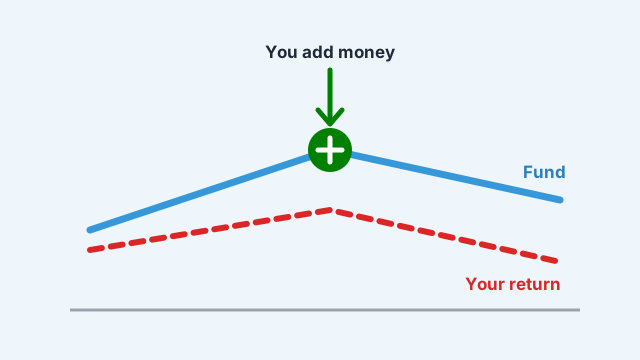
You can own a fund that reports a gain and still lose money on it. That's not a trick. It's the difference between the fund's return and your return, and it comes down to when your money went in and out.
You invest $100,000 in a fund. In the first year the fund gains 20%, so you have $120,000. Encouraged, you add another $100,000, bringing the account to $220,000. In the second year the fund falls 10%, and you end with $198,000.
| Per year | |
|---|---|
| The fund's return (time-weighted) | +3.9% |
| Your return (money-weighted) | −0.7% |
The fund did fine. But you put in $200,000 and ended with $198,000, because more of your money was invested during the bad year than the good one.
Investor's Report Card works out your return from your monthly balances and the date and amount of every deposit and withdrawal, so the number it shows is what your money actually earned. That's the number to put next to the market.
Investor's Report Card turns the numbers on your monthly statements into a report card: your account's real return, after deposits and withdrawals, next to the market indexes you choose, graded A+ to F.
This article is general information, not investment advice. Investor's Report Card is not a registered investment advisor and doesn't recommend any investment. Past performance doesn't guarantee future results.