By Investor's Report Card · October 16, 2026
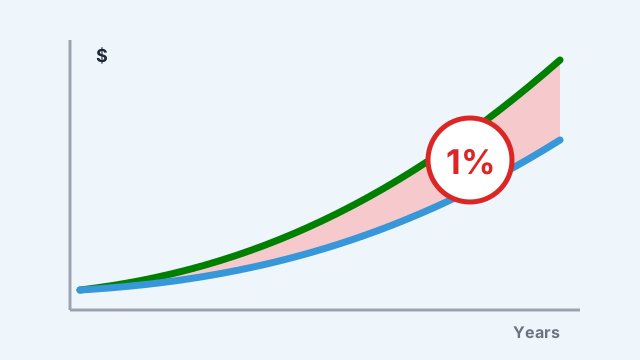
A 1% yearly fee sounds small. But it's charged every year, on your whole balance, and the money it takes can never grow again. Over decades that adds up to a startling amount.
Say you invest $250,000 and leave it alone. Before fees, your investments earn 7% a year. With a 1% yearly fee, you keep 6%.
| Years | No fee (7%) | 1% fee (6%) | Cost of the fee |
|---|---|---|---|
| 10 | $491,788 | $447,712 | $44,076 |
| 20 | $967,421 | $801,784 | $165,637 |
| 30 | $1,903,064 | $1,435,873 | $467,191 |
Hypothetical example: steady 7% growth before fees, no deposits or withdrawals, no taxes. Real returns go up and down.
Try your own numbers in our free fee calculator.
After 30 years the fee has taken almost a quarter of what the account would have grown to: $467,191, far more than the original $250,000. After 20 years it's about a sixth.
An advisory fee is usually listed on your statement. The funds inside your account also charge their own yearly expense ratio, which is taken out of the fund's returns and never shows up as a charge. An actively managed fund can cost 0.5% to 1% a year on top of the advisor's fee; a broad index fund can cost as little as 0.03%. Add them together to get your real total cost.
A fee is worth paying if what you get for it is worth more: better results, or planning and advice you value. The only way to judge the first is to compare your account's return, after all fees, with what the market returned over the same time. That's what Investor's Report Card shows you.
Investor's Report Card turns the numbers on your monthly statements into a report card: your account's real return, after deposits and withdrawals, next to the market indexes you choose, graded A+ to F.
This article is general information, not investment advice. Investor's Report Card is not a registered investment advisor and doesn't recommend any investment. Past performance doesn't guarantee future results.